Stratford-upon-Avon
13 The Courtyard
Timothy's Bridge Road
Stratford-Upon-Avon
Warwickshire CV37 9NP


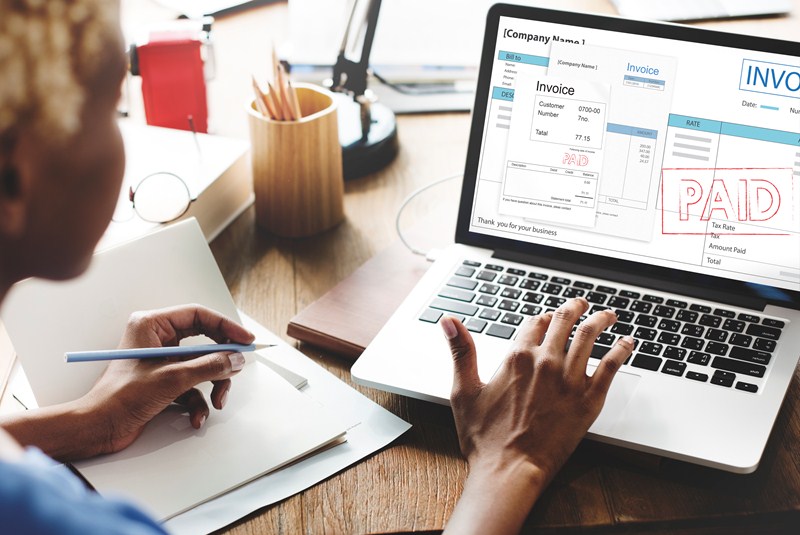
The government has unveiled new measures to support small businesses and the self-employed by tackling the scourge of late payments, which according to the Smart Data Foundry is costing SMEs £22,000 a year on average and according to FSB research, leads to 50,000 business closures a year.
The government will consult on tough new laws which will hold larger firms to account and get cash flowing back into businesses – helping deliver our mission to grow the economy.
In addition, new legislation being brought in the coming weeks will require all large businesses to include payment reporting in their annual reports – putting the onus on them to provide clarity in their annual reports about how they treat small firms. This will mean company boards and international investors will be able to see how firms are operating.
Enforcement will also be stepped up on the existing late payment performance reporting regulations which require large companies to report their payment performance twice yearly on GOV.UK.
Under current laws, responsible directors at non-compliant companies who don’t report their payment practices could face criminal prosecutions including potentially unlimited fines and criminal records.
The consultation which will be launched in the coming months, will also consider a range of further policy measures that could help address poor payment practices.
Research shows that every quarter in 2022, 52% of SMEs small firms in the UK suffer from late payments, meaning roughly 2.8 million small firms face this issue, with the Federation of Small Businesses describing it as one of the biggest problems facing SMEs.
Late payments are just one element of the problem, with some SMEs forced to wait months for contracts to be fulfilled and some are even forced to take out loans against their own homes to manage cash flow.
Cracking down on late payments will unlock growth for 5.5 million small firms by enabling them to invest their time hiring more employees, boosting wages, and exporting around the world, rather than chasing down late payments.
The Business Secretary will hold a joint call with the Federation of Small Businesses later today to outline to SME leaders the work the Department will undertake to put in place tough new laws to end bad payment culture. New proposals, subject to consultation, will be bought forward on audit and audit committees, in order to help rebuild small businesses’ trust that they will be paid on time.
Grenfell James Technology Adoption Index
How does your business perform against others adopting financial tech? Find out with our interactive diagnostic:
1.
How does your business receive invoices?
A)
Invoices are mainly received in paper form
B)
Invoices are mainly received by email
C)
Invoices are emailed then automatically forwarded to a designated mailbox
2.
How are purchase invoices processed?
A)
Invoices are entered manually
B)
Invoices are attached to manually raised invoices
C)
Automated software (e.g. ReceiptBank, 1Tap, HubDoc etc) collates invoices
3.
How are accounts processed?
A)
Using Excel/paper-based
B)
Using Computer-based, offline software
C)
Using cloud-based accountancy software
4.
How often is business data revised?
A)
Data is updated annually
B)
Data is updated quarterly
C)
Data is updated monthly or more often
5.
How is banking updated for your business?
A)
Banking is updated manually
B)
Banking is updated by imports
C)
Banking is updated via a live feed
6.
How are bank payments made?
A)
Bank payments are manual
B)
Bank payments are made using bulk imports
C)
Bank payments are made directly via accounting software
7.
How are bank receipts reconciled?
A)
Receipts are chased and reconciled manually
B)
Receipts are chased and reconciled automatically
C)
A third-party platform is used to chase debts and collect fees
8.
How often are management reports produced?
A)
No reports are provided
B)
Reports are provided but often too late to be valuable
C)
Reports are automated with real-time information
Score 8-12:
Curious Exploration
Your financial technology phase is Curious Exploration
% of respondent businesses are in this phase too.
Switching accountancy systems may seem like an upheaval, but can be much more straightforward than most businesses imagine. From talking to our clients, they have found moving from paper invoicing and desktop-based accounting software to the cloud and apps quickly makes the transition process a worthwhile investment of time. Digital accounting solutions bring in streamlined processes, up-to-date business data and greater confidence in the accuracy of information when making financial decisions.
Grenfell James works with your team to fully assess the needs of your business and minimise the impact of any transitions for solutions we recommend.
Score 13-19:
Measured Discovery
Your financial technology phase is Measured Discovery
% of respondent businesses are in this phase too.
Once cloud accountancy software is in place, there’s still plenty of scope to improve your accountancy processes and make sure your business is maximising the benefits of adopting a digital accounting solution. Grenfell James assesses each business to understand how any implemented solutions are being used, identify areas for improvement and the needs of the business overall to support your business goals and achieve success.
Our team of experts can discuss a range of time-saving automation and get different apps and cloud-based solutions talking to create and manage a digital accountancy eco-system to help your business grow.
Score 20-24:
Bold Innovation
Your financial technology phase is Bold Innovation
% of respondent businesses are in this phase too.
You know the benefits of accounting technology and the impact it can have on your business goals. If you want to take it a step further, our team can conduct a systematic review of your processes, apps and business goals to ensure your digital accountancy ecosystem is keeping pace with the changing needs of a growing business.